


#GoodReads – Plant Portrait: Tulip tree

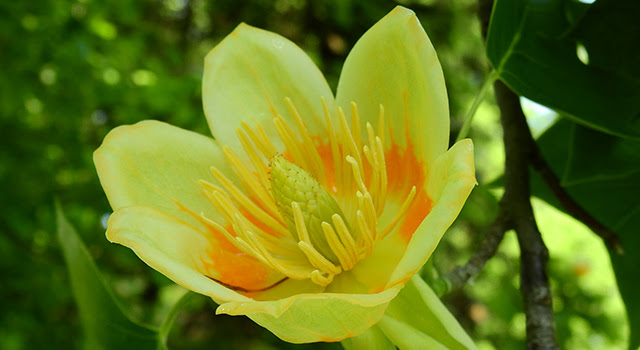
Plant Portrait: Tulip tree (Liriodendron tulipifera)
Via: In The Zone
“Tulip tree gets its name from the spectacular yellow-green and orange blooms it produces in spring — start keeping an eye out for them now! A tulip tree begins producing these famous flowers once it is eight to 15 years old.
The leaves are also remarkable for their shape: four-to-six-pointed lobes and an outer edge forming a shallow “V” or nearly straight line. This leaf shape sometimes resembles a cat face silhouette! In fall, the leaves change from green to bright yellow and flat, slender, pointed fruits appear in attractive cone-like clusters that stay on the tree after the leaves have fallen, giving this species year-round visual appeal.
No shrinking violet, the quick-growing tulip tree can reach over 35 metres and, in good growing conditions, can live an astounding 300 years.
Every part of the mature tree is useful to wildlife. The flowers attract bees and ruby-throated hummingbirds (Archilochus colubris). Eastern tiger swallowtail butterflies (Papilio glaucus) and tuliptree silkmoth (Callosamia angulifera) caterpillars eat the leaves. Birds nest in the branches and eat the seeds, as do small mammals.
Tulip tree wood, relatively soft for a deciduous tree, is used commercially to make cabinets, furniture and other items as well as to produce pulp.
In Canada, this species’ native range is limited to mild spots within the Carolinian zone in southern Ontario. It is also planted ornamentally beyond that area, farther north in Ontario and in southern Quebec, where it can sometimes grow successfully.
Considering a tulip tree for your yard? Saplings can be found for sale at nurseries. Choose the site carefully. This tree needs a lot of space, full sun and deep soil, ideally sand or sandy loam. It thrives in moderately moist spots, not extremely dry or extremely wet ones. Be sure to keep your tulip tree from drying out in the summer so it can live a long, healthy life and support wildlife for decades (maybe even centuries).”
To read more, click here.
